Showing posts with label Ernest Hemingway. Show all posts

Wednesday, 24 June 2020

Writing your lockdown novel


I am one of thousands of people who are writing a novel draft during lockdown. (Let’s hope it’s not millions, but who knows?) The peace and quiet, the sense of a global pause, the endless home-based hours – for those without onerous family responsibilities, this seemed like a golden opportunity. Still seems like it, as ‘lockdown’ segues into ‘period of confusion’.  With a partner better at cooking than I am, a furloughed adult son and a newly part-time job, it certainly seemed like a good time to me. And still does, even though I have no idea how far to stand away from other humans outside my current bubble, or whether I should mask-up to go to Waitrose.

So what is the story now? I teach creative writing, this is my fifth novel, I am half-way through the first draft. I hesitate to call myself an expert, because writing is so peculiar, and each book so different from the last. By the end of any novel, you are generally an expert on that novel, but not necessarily on any other novels you might write. And I’m also the kind of writer who – foolishly, perhaps – writes novels that are dissimilar. I don’t even stay in the same historical period. (That is definitely not a smart move, so my future books may well be set in the Victorian age, like my current Work In Progress.) But I am past the ingenue stage. I know what doesn’t work, for me, at least.

Writing blind

This is the approach in which you just slam the words down, in the spirit of Jack Kerouac. You don’t look back, you don’t read your draft before starting work each day, you just get the darn words down. The file on your computer grows, there are lots of words there. Therefore, you are a writer. There is something to be said for this, because all writing has its use, and this may help you establish a writing habit.

But the reason I know it doesn’t work for me is that I end up with a lot of pages and no story. And the germ of the idea – what the tarot calls ‘the scent of the undertaking’ seems to have been drowned in the wrong words, it’s in there somewhere, but I don’t know how to find it. Both D.H. Lawrence and H.G.Wells used to write a new draft from scratch, rather than editing the existing one, and I wonder if this is because they had that feeling, that they had to have a blank sheet to imagine the story freshly.

Working to a plot outline

I’ve tried this too, bruised from the experience of churning out words. But the problem with this, for me, is that I don’t want to know too much more than my characters do. I have to experience their problems and issues from their point of view, and see how they resolve things. If I already know, and have just put the problem there so I can fill some pages, then the energy goes out of it. The well-balanced approach is to have a rough plot outline, or plot ideas that you think will work, provisionally, but which are subject to adjustment.

Being a perfectionist

People sometimes think that perfectionism is a desirable quality, because it means that someone has high standards. But there are no standards which can deliver perfection – there is no such thing as perfection in human life. No perfect novel has ever been written, not even The Great Gatsby, which sometimes attracts that kind of praise. And even if your finished novel is going to be a work of genius, it has to be allowed to be rubbish at first go. (As Ernest Hemingway famously put it: ‘The first draft of anything is shit.’) So your novel-in-progress will often feel as if it is no good. That is its prerogative.

Talking too much

I once heard Edna O’Brien describing the way young Irish writers sometimes go to the pub and talk their books into oblivion, carried away by the Guinness and the craic. I am a talker myself, if I get excited I want to share what I am working on. Currently, I am keen to bore the partner and adult son with highlights from the life and times of H.G Wells, and they are quite keen not to listen. That kind of stuff is fine, as is sharing drafts with other writers if that works for you – the quid pro quo element helps, you feed back on their work and they feed back on yours and it all feels like part of a process. But talking endlessly about your characters and plot can kill an idea, make it seem almost not worth writing. I try and keep quiet if I can, and jot notes down rather than talking.

Impatience

This relates to the over-talking issue, because sometimes I want to talk because I want the story to be out there, and I know it will be months, if not years, before that happens. Novels are like lives or relationships, they have phases, seasons, moods, good and bad days, periods when they seem to be spinning down the vortex of your self-destruction (or maybe that is just me), periods of euphoria and hope. What I try to do, at the point I am at now, with 40,000 words down and 40,000 very much to go, is focus on the provisional nature of the writing. I try and keep a balance between clarity and wild imagination, focusing on that first glimmer that made me want to write it in the first place, but also thinking clearly about how that can best be dramatized and live.

I’ve just had the first half printed out (at our local, newly reopened print shop), read it through in hard copy, covered it in notes and corrections, and am ready to move on to the second half. I find that doing it this way stops me from becoming anally obsessed with editing paragraphs and polishing sentences. The editing that happens at that point is about story, more than style.

Does it work? Is this how you write a novel? I’ll let you know. I think it’s probably how I will write this one. For now, it’s onwards and sideways, following this weird thing where it needs to go.


Wednesday, 25 July 2018

Six top tips for summer writing


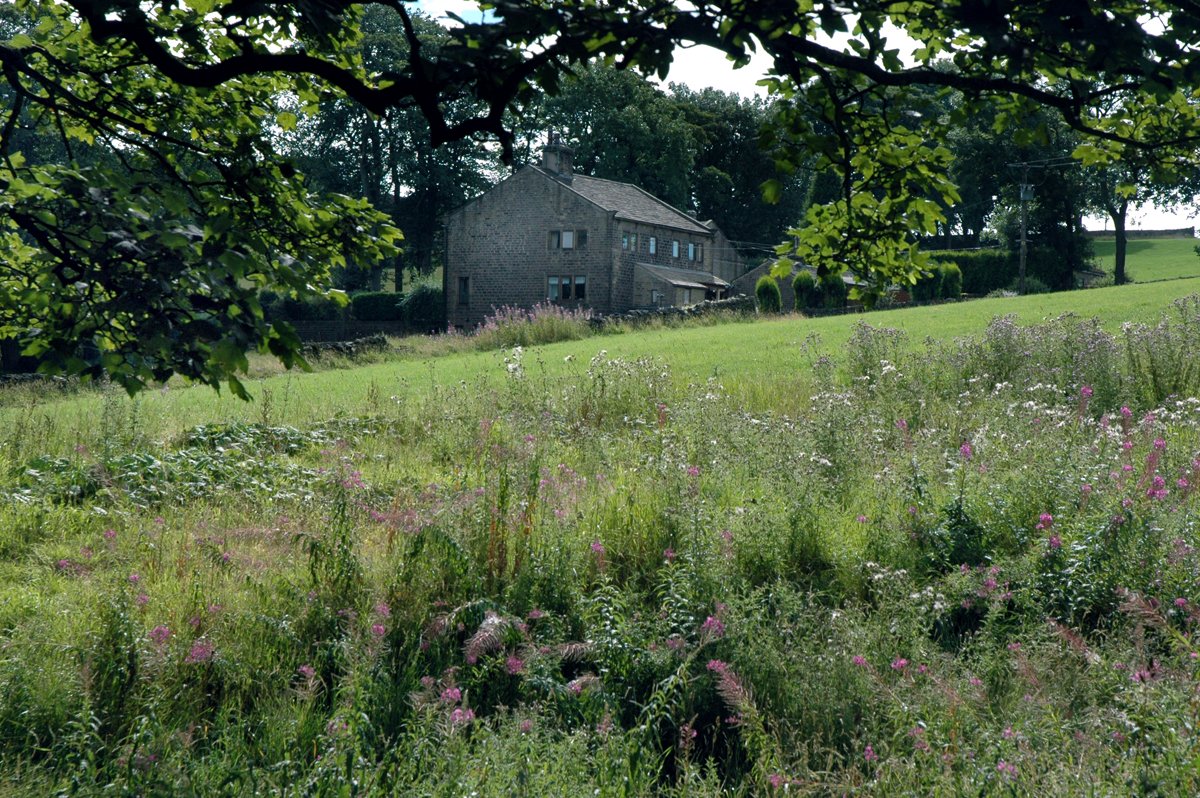
Yorkshire moors - Bronte country
FreeImages.com/Jenny Rollo


1.       Start early – beat the summer heat. Set your alarm for no later than 8 am and postpone all your household or admin jobs until the afternoon. Keep your mind as free as possible before starting work, and get down to it as soon as possible after you get up. The author Monique Roffey writes as soon as she wakes up when she is working on a novel; the mighty J.K. Rowling works in bed first thing.

2.       Set yourself achievable goals. Be specific and realistic. Can you really take the NaNoWriMo approach and write a entire novel in August? Seems unlikely – and their word goal is 50, 000 whereas you will have to craft at least 70,000 to reach conventional novel length. It might be better to work on one short story, or two produce two or three good chapters, or to resolve an issue that you haven’t had head space to address before.

3.       Choose the right place to work. It may be that you have a quiet office in the house (we currently have builders next door so I am feeling the pain here). Or it may that you have a cafĂ© or library where you can work well. Wherever it is, make sure that you spend at least three hours a day in that place, writing, and only writing.

4.       Say ‘no’. I very rarely tell anyone I am not meeting them/taking something on because I’m writing – it somehow has the same effect as saying that you are staying in to wash your hair. People feel snubbed, weirdly, because the convention is that writing should be your lowest priority in the modern, speed-driven world.  But I have a range of substitute excuses, usually to do with my (admittedly demanding) day job, or family stuff (and there is admittedly also plenty of that). Whatever reason you give, just say ‘no’. Don’t feel pressurized to fit in barbecues or building a new extension on your house. This is your summer of words.

5.       Be active. This may sound contradictory, but do also make time to move about. A writer is not a brain on a stick, and getting your blood circulating helps your brain to work. There is also a weird connection between creativity and walking. Virginia Woolf was a great fan. Ernest Hemingway used to go hunting after putting in a morning’s writing. There is no need for that.

6.       Read. There is also a lovely connection between reading and writing. The voice and created world of another writer is inspiring and curiously restful. Choose the right author – you may not want to immerse yourself in the work of the prize-winning writer whose book was published this year to wild acclaim and is writing in your chosen genre. You’re only human. Read nonfiction, poetry, an established classic. Read like a writer, seeing how they have addressed the problems and challenges you are facing in your own draft. And read like a reader, paying close attention and letting the writers take you where they want you to go.   

Thursday, 9 February 2012

UNLEASH THE POWER OF YOUR NEGATIVITY

One of the great joys of writing is that fiction thrives on misery. As someone said to me recently: "Everybody wants to be happy, but no one wants to read a happy story." Happy endings are fine; happy beginnings are perfectly acceptable, but I have yet to read a gripping story which has a happy middle. And it's a short step from unhappy stories to unhappy authors. Writers as diverse as Dickens, Hemingway, Woolf and Orwell mined their own misery for stories and ideas. The naturally sunny and well adjusted person is - generally speaking - less inclined to write obsessively, committing the seat of the pants to the chair for the necessary hours, weeks, months and years.


We live in a society which undervalues gloom. There is a noble tradition of writing which draws on melancholy for its inspiration - more or less the entire Romantic movement, for a start. The art of staring out of the window thinking bleak thoughts and then writing some of them down is still with us. And thank God for this in society which seems to see happiness as an entitlement.


I'm writing this during Mental Health Awareness Week. I don't want to trivialise the real suffering and debility that serious mental ill health causes, but I do believe that in setting impossible ideals for our emotional well-being, many  of us are putting ourselves  under undue pressure to be 'normal' and 'happy'. To me, this is the psychological equivalent of looking at anorexic adolescents in magazines and hating your own flesh. A certain degree of mental unease and anxiety is positively useful for writers. (Although too much can stop us writing altogether as Virginia Woolf knew only too well - you can sense her scribbling to keep insanity at bay in the almost manic wisdom of her notebooks.)

Even so, fiction would be much the poorer without the functioning neurotic. And speaking from experience, I know that writing fiction can help us find a sort of equilibrium even if it is only partial and temporary.

Monday, 30 January 2012

DO YOU THINK I'M SEXY?

I generally like to think I am well-prepared for questions that an audience might ask, due to many years spent thinking about making the right impression at august literary festivals such as Hay, Edinburgh etc. But I was completely wrong footed by a Bath Spa student who recently asked me who was the sexiest author I had ever met. I rather limply came up with Julian Barnes, who I have never actually met as such, but only been at the same lunch as. (This was at a Cosmopolitan magazine story prize in the early nineties, which I failed to win, though I was on the shortlist.  I rather admired his louche and austere smoking style.)


So ARE authors sexy? Frankly, I am quite happy to leave this off the job description, and it's definitely not a core requirement. If you put 'sexy author' into Google image, you get Paul Auster, Neil Gaiman, Zadie Smith and Penelope Cruz. Now, call me picky, but the only person who really qualifies in that list is the madly beautiful Zadie Smith. Auster and Gaiman are defined as 'sexy' because they look perfectly fine and are writers. Penelope Cruz is only in the list because she comes up under 'sexy' anything.


Of course, an author's perceived 'sexiness' also can also depend on what they write. Danger and macho-ness seem to do the trick (if you are Ernest Hemingway) or being edgy and naughty (if you are the young Martin Amis, though at the time he was assisted by looking a bit like Mick Jagger). Actually writing about sex isn't necessary. I have put a bit of shagging in my latest book, but not because I wanted to be sexy. I only take my characters' clothes off when it is absolutely necessary for the plot.