Why is ‘Wolf Hall’ so successful? Or
‘Restoration’? Or ‘The Other Boleyn Girl’? They are all very different in their
approach, but all have vivid and believable characters that the reader cares
about. Even an apparently unsympathetic character like Thomas Cromwell becomes
engaging and absorbing when we are party to his thoughts and fears.
When writing my own novel, 'Dark Aemilia', I fell in love with a real historical character, Aemilia Bassano Lanyer, the first woman to be published professionally as a poet in England, and she was the main inspiration for my story. I worked hard on the plot, and on the structure of the novel, but the themes arose from her character and the way that she responded to the relevant work of William Shakespeare - the later Sonnets, which are full of pain and rage as well as passion, and 'Macbeth' (or as I should say, 'the Scottish play').
There were times while was writing the novel when I was discouraged - VERY discouraged - and it was extremely useful to have in Aemilia such a robust and determined colleague. It was impossible for me to give up when she had surmounted obstacles which were so much greater, and embarrassing to whinge when she had had to contend with the forces of Early Modern Patriarchy, and all I had to contend with was an agent operating in Agent Time (which moves very, very slowly) or a faulty washing machine. Write about someone you love, and you won't care if some readers don't like them. Write about a character who inspires and obsesses you, and getting up at 6am each day to get the words down will feel like play rather than work.
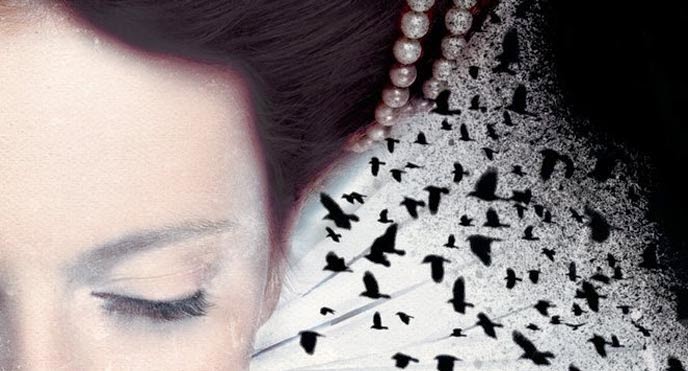
A key question here is: has human nature changed? I don't think it has in fundamental ways - all people fear death, seek pleasure, feel hungry and so on. But everything else - all the customs and assumptions - are constantly changing. In my own lifetime, social media has transformed social life and even the way we think. I think that, as with language, historical characters are a hybrid of what is intelligible to modern readers and what is plausible in terms of the period you are writing about.
It is a challenge, and not everyone will agree about the extent to which the past and the present should inform your characters. But the more you write, the more time you spend with the characters in your story, the more idea you will have about their 'voice' and their identity.
Do you fancy being a writer? Want to get a book deal? Planning that Booker speech? Be careful what you wish for....
Wednesday, 4 June 2014
Tuesday, 3 June 2014
Top ten tips for historical fiction - find the gap
It is Mr Gradgrind in 'Hard Times' who says: “NOW, what I want is, Facts. Teach these boys and girls nothing but Facts. Facts alone are wanted in life... Stick to Facts, sir!”
Ironically, Charles Dickens was quite a fan of facts himself - like many authors who start out as journalists, he was engaged with social and political life and the zeitgeist, and in many ways facts were his inspiration. But he knew they had limitations. 'Hard Times' is a novel which seeks to expose the ills of the education system, and of the industrial machine economy of the Victorian age, and to do this Dickens deploys factual information to dramatic effect. This is a society, he suggests, in which the imagination has been suppressed and the human spirit is being crushed. He uses hyperbole and exaggeration, but he is still using a factual framework.
Facts were useful to Dickens, but they did not constrain him. Most of his novels were written in the recent past, as were those of George Eliot and Jane Austen. But one of his best loved novels, 'A Tale of Two Cities' dramatises the French Revolution. And what the reader remembers is the character of Sydney Carton, his doomed love and his final words before going to the guillotine: 'It is a far, far better thing that I do, than I have ever done; it is a far, far better rest that I go to than I have ever known..' Do we care that there is no historical evidence that an Englishman named Sydney Carton was executed in the cause of true love during the French Revolution? No, we don't. (Well, I don't, please feel free to comment if you find the plot of this novel annoying.)
Writing historical fiction means that you need to develop a sophisticated attitude to facts. You need them, but you also need an engaging narrative, a plot, coherent themes, characters who readers can engage with. Though we are adept at making the past into a series of myths and stories, it is of itself both chaotic and filled with far too many facts to pack into even the longest novel - Umberto Eco's 'The Name of the Rose' is a veritable compendium of arcane facts, but even he had to miss some information out. And his story is a well-constructed thriller.
If you find facts daunting, it is a good idea to a. find a period or social group about which (or whom) relatively little is known or b. to write about the more distant part or c. to write alternate history and mix fact and fantasy. Gaps are just as useful as facts.
Monday, 2 June 2014
Top Tips for Historical Fiction: Be Succinct
Be succinct. Less is more in historical fiction – don’t get
bogged down in long descriptions or expositional dialogue.
Dump any research information that isn't relevant to your story. One reviewer praised Sarah Waters because (in The Night Watch) he knew the knobs on the radio were made of Bakelite, but she didn't say so.
Your book may be long - it may need to be long in order to address all your themes and tell a complex, nuanced story. But it shouldn't be long because you have padded it out with stuff from some archive.
In the brilliant Slammerkin, Emma Donoghue keeps description to a minimum, but vividly conveys the eighteenth century setting nonetheless. Comprehensive detail, words piled on words, aren't needed to conjure a scene. What you want is the right image, a key detail, which will stand for the greater whole.
Er, that's it. Less is more, as I say.
Monday, 19 May 2014
Top 10 tips for historical fiction - the time machine
Put your reader in a time machine. If you have found a way to immerse yourself in the period, try to give them the same experience. I found that one of the great joys of writing about the past - London 500 years ago in my case - was that it was an utterly escapist pursuit. I was completely immersed in a kind of fantasy, and yet at the same time I felt I was trying to uncover and re-imagine what life was really like, and how people actually felt. This is an image of the Early Modern London as imagined by the producers of Dr Who in 2007. (You can see the Tardis if you look closely.)
If you are a historian or a biographer, there is a greater responsibility to 'get it right', and although a biographer might speculate about what their subject thought or how they responded to certain events, they are usually pretty restrained. This doesn't apply to everyone - Peter Ackroyd works across both fiction and non fiction, assembling his material to recreate lost worlds or dead writers with verve and audacity. When I wrote my book, once I had the facts that I needed in place to give my story a framework which was accurate, my great challenge was to convince the reader that the story was happening around them. And that is where the time machine comes in. You climb aboard, the controls whir away, and you see where it takes you. Just as Marty McFly does in 'Back to the Future' .
There is a strong element of vulgar showmanship involved in writing like this, and I am not in the least embarrassed about it. It's vital to believe in the world that you have made up, a fantasy based on fact, a magic ground that might, just might, feel like a lost reality.
Saturday, 19 April 2014
Dark Aemilia Publication
It is 23 days since my novel Dark Aemilia was published by Myriad Editions. Why, you might ask, did I wait this long to blog about such a momentous event? Partly because in a rather OCD manner, I felt that I should complete my Top 10 writing tips before having an intermission to talk about My Actual Writing Life.
Partly because of emotion - the joy of knowing that my book is out there is counterbalanced by the anxiety of not knowing what out there will make of it.
And partly because of good old fashioned busyness: I have spoken at two conferences and chaired a short story seminar since the book came out. And as well as working for the Open University, being the mother of teenagers is somewhat time consuming.
Here's Georgia, on an early pub outing before she went all Katie Puckrik:
And the one in the green-rimmed shades is Declan during his 2008 film-making phase:
:
| Authorial anxiety |
And partly because of good old fashioned busyness: I have spoken at two conferences and chaired a short story seminar since the book came out. And as well as working for the Open University, being the mother of teenagers is somewhat time consuming.
Here's Georgia, on an early pub outing before she went all Katie Puckrik:
| Georgia sitting quite near a bottle of beer |
And the one in the green-rimmed shades is Declan during his 2008 film-making phase:
:
![]() |
| Declan and Digby in the mean streets of Brighton |
Keeping tabs on the two of them is a bit like trying to glue peanut butter to the ceiling. Writing fat books set in the Early Modern period is a breeze in comparison.
Writers, as Fay Weldon once said, have lives. One of the defining attributes of my own writing life is muddle - each day seems like an attempt to extract writingness, or to decide whether reading other people's books or talking about being a writer, or watching films to learn about plot is writingness enough, or whether real writing, in a notebook, must always take place. (It should do, but must it?)
Publication day is always going to be one of the great events in the life of any writer, but it is also a curiously anticlimactic experience. Unless you are already famous, the emergence of your new work will be incremental rather than immediately operatic. Your novel may already be on sale (mine was spotted at various airports by various friends). It may not immediately appear in all known bookshops. Amazon may seem curiously immune to its status as a major cultural artefact. And so on. The last 23 days have not shaken the world. It has remained on its axis, though there was a small earthquake in Rutland the other day so it did wobble slightly.
But just to focus on the great event of the birth of Dark Aemilia, here is a short extract from the speech I made at my launch party:
'Like
most writers, I’m rather obsessive and end-driven. It’s easy to get sucked into
a state of mind in which all you think about is the next goal that Must Be
Achieved – finish the draft, find the publisher, get reviewed, appear on the
short list, improve your Google ranking. It can go insatiably on and on. But
sometimes, a good thing, a brilliant thing, happens. And then it is time sit
back and say – this is great. And today is one of those days – one of the
happiest and most satisfying days of my life. Dark Aemilia is an actual book,
and in one way, it doesn’t matter what happens next.'
More on how this all goes later, and before then I will impart six more nuggets of timeless wisdom about writing historical fiction.
Saturday, 8 March 2014
Top 10 tips for historical fiction - think laterally
Historical fiction is a broad and eclectic genre. You don't have to write a story that is a copycat of what has already been written. So my fourth tip is to think laterally and customize tropes and conventions from other genres as freely and cheekily as you like. Remember that there are already numerous sub-genres that have done exactly that: romantic historical fiction, historical thrillers and alternative histories, which are part historical fiction, part fantasy.
Examples include Maeve Haran's The Lady and the Poet (historical romance) which tells the story of the relationship between John Donne and Anne More; Dissolution, the first book the Shardlake series of Tudor crime thrillers by C.J. Sansom and Ruled Britannia by Harry Turtledove, which is set in an alternate sixteenth century England which has been invaded by the Spanish Armada. Some books span more than one sub-genre - for example, Fatherland by Robert Harris is both an alternate history (imagining that Germany invaded England at the end of World War II) and a thriller.
This is good news if you are fan of a particular genre of writing, and can help shape and focus your ideas .Plot can be an issue for many new or inexperienced writers, and both romances and thrillers operate within certain constraints and conventions, which both limit your options and clarify your narrative goals. (A romance should be a love story in which your protagonist has to overcome a series of obstacles to be with their lover; a thriller should revolve around a quest or 'chase' story, with the protagonist seeking to resolve a mystery or use their ingenuity to avert disaster or achieve their goal.)
The literary historical novel is also having a renaissance, following the success of authors like Rose Tremain, Sarah Waters and Hilary Mantel. The bets are off here - you can experiment and delve into much darker or stranger terrain if you want to write in this form. The recently announced long list for the Baileys Women's Prize for Fiction included a number of historical novels. (The books in question are: The Strangler Vine by Miranda Carter; The Luminaries by Eleanor Catton; Burial Rites by Hannah Kent and The Undertaking by Audrey Magee. There are also historical elements in two other books on the list: The Flamethrowers by Rachel Kushner moves backwards and forwards in time, and The Lowland, by Jhumpa Lahiri covers several decades of Indian and American life.
So - the good news is that this genre can be bent and twisted and adapted to any form that you like. You can use certain conventions, you can make lateral connections, and you can subvert the whole lot if you want to.
Friday, 7 March 2014
Top 10 tips for historical fiction - tell a good story
Tell a good story – character and plot are just as important in this genre as in any other. Don’t make the mistake of letting the setting dominate everything else.
Historical fiction encompasses a wide range of sub-genres, and some historical novels are more page turney than others. (Excuse the erudite literary jargon there.) A novel like 'The Name of the Rose' demands more patience and application from the reader than 'The Other Boleyn Girl'. 'Story' tends to be more overtly important in popular fiction than in literary fiction, though all these terms are inexact and some writers think that a plot is over-valued by editors in literary writing, as this blogger has pointed out.
So what do I mean when I suggest that you should 'write a good story'? My advice is that you should be able to lose yourself in the world that you have created, that you should create characters that obsess you and fascinate you, and that you should have some idea about the needs and desires of these characters. I don't mean that you should have a three act structure or a shopping list of must-haves taken from 'how to write' books' (Although I do suggest that you should be aware of all these things.) And I don't mean that you should be scared of experimentation. A good story is, in the end, the story that you needed to tell, which you have lived with and lived inside and committed yourself to.
There is something organic and instinctive about the best stories and the best story tellers. Don't just read historical novels, but be voracious and catholic in your reading, and return to books that you have loved in the past. My personal favourites include 'Rebecca', 'Wuthering Heights', 'Pride and Prejudice', 'The Wolves of Willoughby Chase', 'Lucky Jim', 'The Talented Mr Ripley', 'The Weather in the Streets' and 'Affinity'.
The only historical novel on the list is Affinity, and I read it before I had any intention of writing in this genre myself. I challenge anyone to write a better plot than Sarah Waters has in that book. I finished it on a train and actually laughed out loud, not because it was funny especially, but because of its sheer audacity and cleverness. It was the perfect ending, the most satisfying and wonderful sleight of hand by the author. If you haven't read it, and you are wondering what I am banging on about, please do.
A good story is a succession of events which make you want to know what happens next. A clever story is one which surprises you constantly, subverting your expectations. You can write anti stories or meta fiction or undermine the form if you like. But this series of blog posts is aimed at anyone starting to write historical fiction, and in my opinion, mastering the art of story telling is a sound starting point. Just as Picasso began by learning the conventions of drawing, so we can learn from the convention of the traditional tale.
Historical fiction encompasses a wide range of sub-genres, and some historical novels are more page turney than others. (Excuse the erudite literary jargon there.) A novel like 'The Name of the Rose' demands more patience and application from the reader than 'The Other Boleyn Girl'. 'Story' tends to be more overtly important in popular fiction than in literary fiction, though all these terms are inexact and some writers think that a plot is over-valued by editors in literary writing, as this blogger has pointed out.
So what do I mean when I suggest that you should 'write a good story'? My advice is that you should be able to lose yourself in the world that you have created, that you should create characters that obsess you and fascinate you, and that you should have some idea about the needs and desires of these characters. I don't mean that you should have a three act structure or a shopping list of must-haves taken from 'how to write' books' (Although I do suggest that you should be aware of all these things.) And I don't mean that you should be scared of experimentation. A good story is, in the end, the story that you needed to tell, which you have lived with and lived inside and committed yourself to.
There is something organic and instinctive about the best stories and the best story tellers. Don't just read historical novels, but be voracious and catholic in your reading, and return to books that you have loved in the past. My personal favourites include 'Rebecca', 'Wuthering Heights', 'Pride and Prejudice', 'The Wolves of Willoughby Chase', 'Lucky Jim', 'The Talented Mr Ripley', 'The Weather in the Streets' and 'Affinity'.
The only historical novel on the list is Affinity, and I read it before I had any intention of writing in this genre myself. I challenge anyone to write a better plot than Sarah Waters has in that book. I finished it on a train and actually laughed out loud, not because it was funny especially, but because of its sheer audacity and cleverness. It was the perfect ending, the most satisfying and wonderful sleight of hand by the author. If you haven't read it, and you are wondering what I am banging on about, please do.
A good story is a succession of events which make you want to know what happens next. A clever story is one which surprises you constantly, subverting your expectations. You can write anti stories or meta fiction or undermine the form if you like. But this series of blog posts is aimed at anyone starting to write historical fiction, and in my opinion, mastering the art of story telling is a sound starting point. Just as Picasso began by learning the conventions of drawing, so we can learn from the convention of the traditional tale.
Tuesday, 25 February 2014
How to write historical fiction - be bold
This is the second of my top 10 tips for writing historical fiction.
Don’t be intimidated by the facts, or the personalities that you discover. The facts are a starting point, not a straitjacket. Remember that even biography is an inexact science.
Once you have done enough research to get a strong sense of the time and place you are writing about, and the people who lived there, you need to free yourself from the idea that you need to be 'faithful to the facts'. You must get the facts right, yes, but you actually need to be unfaithful to them. Being historically accurate means that you don't change the dates of battles, the deaths of known historical figures, or make other blunders which are anachronistic and undermine your credibility as a historical fiction writer. (This does not apply if you are writing altered history, of which more in a later post. But altered history has as much in common with fantasy as it does with this genre.)
However it is possible to decide that - for example - Thomas Cromwell was beaten and despised by his father, and this was a formative element of his psychology, as Hilary Mantel does in Wolf Hall, or that Charles II rewarded an obscure physician for saving his favourite dog, as Rose Tremain does in Restoration. If you don't make such leaps of imagination, then you might as well write a text book, which is fine, but it's not fiction.
Biographers create a story: the story of the life of their subject. They research that person's life and perspective, using letters, their own work, their own diaries, the diaries of others, and perhaps interviews if their subject is still alive or died recently. Once this work is done, the biographer uses supposition to try to enter the consciousness of this person. They may dramatize or even invent certain scenes to bring the 'story' alive. Some are more audacious than others - Peter Ackroyd is well-known for using the devices of a novelist to explore the lives of writers like Charles Dickens.
Fiction writers go beyond supposition - they invent. You have just as much right to do this if your book is set in 1614 as you do if it is set in 2014. And this still applies if you are basing your story on the lives of real people.
You can't write historical fiction politely. You have to force your way into the past, and claim it as your own, no matter how crazy or impossible this may seem. This is what Fay Weldon said to me when I was working on an early draft of my novel Dark Aemilia 'If you are going to put William Shakespeare in your book, he has to be your William Shakespeare, and no one else's.'
Tuesday, 11 February 2014
Top 10 tips for historical fiction - know your field
One of the reasons I used to think that writing historical fiction
was not for me was that I didn’t think I knew enough about history. I had the
idea that it would be better to write about ‘what I knew’ because it would save
me a bit of time. If I based fiction on familiar, everyday facts, then I could
put the energy I would have put into finding out about farthingales or dropsy
into writing the actual story.
So my first novel was set in my home town, Brighton, in what was
then the present day. (The year 2000 or thereabouts.) But it turned out that
research was essential if that story was to work. When confronted with the
blank page, unless you can really recall the precise texture and detail of an
experience, you have three choices:
1. Use your imagination
2. Be extremely brief.
3. Find out about the precise texture and
detail of the experience.
Choices one and two are fine, and I use them regularly. In fact,
all fiction is a mix of research, memory and imagination, and if you aren't
prepared to go for it and make stuff up, you are probably better off doing
something else. Brevity and elision are gifts to the writer – fading in an out
of scenes, cutting to the chase, avoiding adverbs and adjectives Unless
Absolutely Necessary – this is good, effective writing.
But Choice 3 will get you in the end. You need to know your
subject. You need to know your subject if you are writing chick lit, or crime,
or a literary novel set in a call centre. There is no escape from this. And
when you set out on your finding out mission, the greatest surprise of all is
that it is extremely enjoyable.
As long as you keep your story and your reasons
for doing your research in mind, and don’t panic about spending time away from
writing new words down, this part of the writing process not only grounds your
story in actuality and real events, it also inspires lots of new ideas, and
helps you refine existing ones. Becoming an anorak is among the great pleasures of
writing.
I am starting a new historical novel now, set in a new period.
(The Restoration.) And I'm going through the same process I went through with
Dark Aemilia. The first stage is scoping out – I am reading big, fat books
about Charles II and the other major players in the period, and slightly
thinner books about Restoration drama. I’m not sure what I will need for my
story at this stage, so I am assuming I will need everything. I am a bit like
someone packing up before emigrating, because writing a new historical novel,
set in an unfamiliar period, is like moving to another country.
Monday, 3 February 2014
Top 10 tips for historical fiction
Okay, so my new historical novel 'Dark Aemilia' comes out next month, and in this blog I'll be focusing on historical fiction and all things associated with it. Here are ten suggested 'top tips' which I hope might be useful both for new historical writers and people already writing in this field who want some fresh advice. I'll be fleshing these out in ten posts over the weeks leading to the publication date.
1. Know your field. Read everything, visit museums, find physical objects that inspire you, talk to family members, watch documentaries and films, pursue all lines of enquiry that are relevant to your chosen period or subject. Be an anorak, it’s more fun than you might think!
2. Be bold. Don’t be intimidated by the facts, or the
personalities that you discover. The facts are a starting point, not a straitjacket. Remember that even biography is an inexact science.
3. Tell a good story – character and plot are just as important
in this genre as in any other. Don’t make the mistake of letting the setting
dominate everything else.
4. Think laterally. Is your story a romance or a thriller? If
so, borrow from these genres. (Try and avoid a zombie mash-up if you can, this
is as passé as Jeremy Paxman’s beard.)
5. Put your reader in a time machine. If you have found a way
to immerse yourself in the period, try to give them the same experience.
6. Be succinct. Less is more in historical fiction – don’t get
bogged down in long descriptions or expositional dialogue.
7. Look for ‘the gaps in history’. Hilary Mantel has talked about
using the unknown in history, the unrecorded and forgotten moments. You can do
the same thing. You can also search out periods that are less popular than the
Elizabethan era, or more distant in time.
8. Character, character, character. Why is ‘Wolf Hall’ so
successful? Or ‘The Other Boleyn Girl’? They are all very
different in their approach, but all have vivid and believable characters that
the reader cares about. Even an apparently unsympathetic character like Thomas
Cromwell becomes engaging and absorbing when we are party to his thoughts and
fears.
9. Develop genre awareness. If you want to write a Tudor crime thriller,
make sure you read C.J.Sansom. If you want to write about the life of Charles
II, read ‘Restoration’. And so on. If you are worried about your style being
influenced when you are writing your own book, then stop reading other writers during
this period, but it should definitely be part of your preparatory research.
10. Read outside the genre. It’s essential to read as widely as
possible and as eclectically as possible if you want to write well and raise
your game to the highest possible level. Historical fiction is not just a
ticket to escapism, it’s a vibrant and varied genre in its own right.
Monday, 13 January 2014
Breaking Bad and Charles Dickens
Okay, so the idea now is that I focus on historical fiction due to the impending publication of my first historical novel Dark Aemilia. So that will be done. But that doesn't mean that I will be donning a metaphorical farthingale and restricting myself to opinions about books set more than fifty years ago. My fundamental belief is that good writing can and should transcend all genres, and that if you want to write well in one field, you would do well to learn the tricks of your trade by reading (and watching) widely and attentively. If you don't do this, your writing runs the risk of becoming predictable and derivative. Taking an idea from one area and applying it to something different and unexpected is one of the hallmarks of creativity. Which brings me to Breaking Bad.
I am often worried when I come late to the party - normal for me - after hearing a lot of hype about a film or TV show. I was underwhelmed by Inception and Gravity, both wildly praised, and I can't stand the mighty post-Russell T Davies Dr Who or Sherlock, its psychic twin. (All of these are brilliantly performed, but woefully underwritten in terms of character and plot, in my opinion.)
The old fashioned, well-crafted novel is somewhat out of favour in literary terms, and it can seem overly prescriptive to insist that character driven plots will always trounce the opposition. But the magisterial Breaking Bad shows how brilliantly this formula can work. Walter White's predicament is Shakespearean in its intensity, but Dickensian in delivery. Walt is driven by insecurity and desperation for money, and his world is that of the average middle class US citizen. The American Dream has failed for him, delivering only debts and fears. His cancer diagnosis liberates him from his old life, and enables him to live with immediacy and passion. But not, obviously, in a good way.
We believe in Walt, and Jesse, and Skylar. We feel we know them. Effective characters can do bad things, and things that are implausible or extreme. The only proviso is that we have to a. accept their behaviour and b. be engaged by it. Spoiler alert if you have never seen this show: Walt has murdered two people by the end of episode three of the first series, and we still care about him.
So how does this relate to Dickens? Because this is slap bang in his territory - not geographically but in terms of character and class. A society in which respectable people can't afford medical bills is very Victorian, as is a world in which class defines relationships. The canvas of Breaking Bad is Dickensian in breadth, undermining not only the US insurance and medical system, but also its conception of right and wrong, and the assumptions made by mainstream society. Debt, hypocrisy and hidden or secret identities are all recurring themes in Dickens - even the fact that Walt is much older than Skylar is a Dickensian trope.
But equally important is the genre and mode of delivery. Dickens wrote in instalments, publishing one or two chapters of his novels at a time. Often, he was writing to tight deadlines, barely ahead of publication. Kevin Spacey has stressed that 21st century TV viewers like to binge on box set TV and challenged TV companies to follow the lead of the makers of House of Cards and release TV episodes at one time, the instalment format gives an added sense of drama and tension to the storyline. And like The Wire, The Sopranos, Six Feet Under and many other celebrated US TV serials, the writers use this format to expand and develop the characters, bringing in twists and unexpected elements of back story which gives us fresh understanding.
I'm not the only person to make this comparison,either. Griff Rhys Jones said much the same thing in a recent interview with the Telegraph.
I am often worried when I come late to the party - normal for me - after hearing a lot of hype about a film or TV show. I was underwhelmed by Inception and Gravity, both wildly praised, and I can't stand the mighty post-Russell T Davies Dr Who or Sherlock, its psychic twin. (All of these are brilliantly performed, but woefully underwritten in terms of character and plot, in my opinion.)
The old fashioned, well-crafted novel is somewhat out of favour in literary terms, and it can seem overly prescriptive to insist that character driven plots will always trounce the opposition. But the magisterial Breaking Bad shows how brilliantly this formula can work. Walter White's predicament is Shakespearean in its intensity, but Dickensian in delivery. Walt is driven by insecurity and desperation for money, and his world is that of the average middle class US citizen. The American Dream has failed for him, delivering only debts and fears. His cancer diagnosis liberates him from his old life, and enables him to live with immediacy and passion. But not, obviously, in a good way.
We believe in Walt, and Jesse, and Skylar. We feel we know them. Effective characters can do bad things, and things that are implausible or extreme. The only proviso is that we have to a. accept their behaviour and b. be engaged by it. Spoiler alert if you have never seen this show: Walt has murdered two people by the end of episode three of the first series, and we still care about him.
So how does this relate to Dickens? Because this is slap bang in his territory - not geographically but in terms of character and class. A society in which respectable people can't afford medical bills is very Victorian, as is a world in which class defines relationships. The canvas of Breaking Bad is Dickensian in breadth, undermining not only the US insurance and medical system, but also its conception of right and wrong, and the assumptions made by mainstream society. Debt, hypocrisy and hidden or secret identities are all recurring themes in Dickens - even the fact that Walt is much older than Skylar is a Dickensian trope.
But equally important is the genre and mode of delivery. Dickens wrote in instalments, publishing one or two chapters of his novels at a time. Often, he was writing to tight deadlines, barely ahead of publication. Kevin Spacey has stressed that 21st century TV viewers like to binge on box set TV and challenged TV companies to follow the lead of the makers of House of Cards and release TV episodes at one time, the instalment format gives an added sense of drama and tension to the storyline. And like The Wire, The Sopranos, Six Feet Under and many other celebrated US TV serials, the writers use this format to expand and develop the characters, bringing in twists and unexpected elements of back story which gives us fresh understanding.
I'm not the only person to make this comparison,either. Griff Rhys Jones said much the same thing in a recent interview with the Telegraph.
Friday, 3 January 2014
On Being Ill
The new broom aspect of the New Year isn't really working for me. I am ill in that useless way that isn't even dramatic enough to be called 'flu' with any seriousness. It's MUCH worse than a mere cold, though, and all thoughts of svelteness, self-improvement and being vegan till six o'clock have been put to one side till Later In the Month. Even I know I won't be perfect on January 11th, and in the meantime I am hoovering up fats and carbs like Bridget Jones in dumped mode.
But... and there is a Pollyanna moment coming up so brace yourself... I haven't stopped writing. If I'm too ill to go out, drink profligate coffee in cafes, or clean the house (ahem) then I have eons of time on my hands. Not all of this can be taken up with warm baths, hot toddies and whinging, and so I am powering through my reading list for my next novel. (Only stopping now and again to wonder why my head is hurting so much, and then putting it down to Lemsip poisoning.)
The 'writing' stage I am at now mainly involves reading and making notes, so it's not a full-on brain dump. It's more like doing a crossword puzzle without any squares to fill in. And the most important thing is to keep taking on the information - particularly when the work-in-progress is a historical novel. (This one is set in the Restoration period, about which I knew Nothing till about last July and started reading about it.) In fact, I get most of my reading done when I am either ill or on holiday, and as there are usually other things that I meant to do on holiday, mild flu/an extremely bad cold is my reading mode of choice.
Insane, I know.
But... and there is a Pollyanna moment coming up so brace yourself... I haven't stopped writing. If I'm too ill to go out, drink profligate coffee in cafes, or clean the house (ahem) then I have eons of time on my hands. Not all of this can be taken up with warm baths, hot toddies and whinging, and so I am powering through my reading list for my next novel. (Only stopping now and again to wonder why my head is hurting so much, and then putting it down to Lemsip poisoning.)
The 'writing' stage I am at now mainly involves reading and making notes, so it's not a full-on brain dump. It's more like doing a crossword puzzle without any squares to fill in. And the most important thing is to keep taking on the information - particularly when the work-in-progress is a historical novel. (This one is set in the Restoration period, about which I knew Nothing till about last July and started reading about it.) In fact, I get most of my reading done when I am either ill or on holiday, and as there are usually other things that I meant to do on holiday, mild flu/an extremely bad cold is my reading mode of choice.
Insane, I know.
Wednesday, 1 January 2014
Five Top New Year Resolutions for Writers
1. Write.
At least 500 words, every day. Preferably before you do anything else.
2. Read.
Good books from different
genres – aim at one novel a month.
3. Seek
inspiration.
Art galleries, country walks, films, music, meditation.
Whatever works for you, make sure you make time for it in 2014. If you aren’t
sure which to go for, try them all.
4. Be yourself.
You are unique and so is your work. Take the ‘abundance’
approach, which recognises that success is not a finite resource, rather than adopting
the ‘scarcity’ mind set, which sees the success of others as a sign of your
own shortcomings.
5. Enjoy the
process!
If you are a writer, this is your life, and there is no better
way to find happiness.
Subscribe to:
Posts (Atom)


