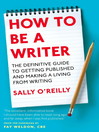
Aha, I have detected a flaw in this blog. It doesn't tell you how to be a writer. Two reasons for this - or maybe three. Number one: it's complicated. Number two: where to start, blog-wise, having written a whole book on the subject? And number three - I am blog-phobic. It's the style of writing I am least comfortable with. Blogs are not diaries (weird, introspective, libellous, insane), but neither do I think they should be press releases, a constant dribble of PR about "I, an Author". (Boring, tiresome, witless, inane.) So I grind to a halt, wondering who reads this stuff anyway, worrying about Wrong Notes and sounding too negative or too smug, or as if I am being overly self-conscious about either of these things, and so...
Anyway, I have put all this behind me now. Strictly professional. I have the book to hand, and I'm about to give you some excellent advice, in bite-size chunks, and really do please feel free not to buy the book, or, if you do, not to put an excellent review on Amazon.
Hilary Mantel wrote "Wolf Hall", I heard her say recently, because it was the book that didn't exist that she wanted to read. On a slightly less high-flown level, I wrote this book because it was the book that didn't exist that I needed to read.
In 2004, I was Published for the first time, which seemed like it ought to mean something, this being the pinnacle of my ambition. But I was isolated and confused. I was waiting for someone to sprinkle fairy dust on my life (as if I was a Pippa Middleton table setting) but there was no fairy dust in sight. I wanted to be a Writer, not just someone who was published by accident. I needed help.
And so a few years later, I set out to write a book that would offer the friendly guidance I hadn't had when I started, and which had taken me years to find. Which is why the book is about "being a writer" not "doing the writing".
Not because I don't care about writing myself - I care more about this than any other part of the Writing Life - but because I know from experience that finding your neutral space is easier if you aren't in a state of sheer, blind panic or the Pits of Despair, the habitat of all too many writers.
Do you fancy being a writer? Want to get a book deal? Planning that Booker speech? Be careful what you wish for....
Friday, 2 December 2011
Friday, 18 November 2011
Novel approaches to history
Right, so today I went to a conference about historical fiction and learned quite a lot, not least of which being that my book might/should hold its own in this field, which is cheering. But as usual with these things the whole area is Dogged by Definition.
For instance: how do you define "historical fiction"? What differentiates a historical novelist from any other sort of novelist telling a fictitious tale set in the past? What is a Fact, and how it it pinned down? (Like a butterfly on a board?) Does the imagined truth of fiction take us to places that the "proven" truth of historians cannot go? To what extent are historians story tellers anyway? To what extent are myths false, and to what extent do they illuminate the way?
All of which related to my own story about the Dark Lady Myth, the idea that Shakespeare wrote his most violently emotional sonnets to a mysterious femme fatale, in a state of morbid sexual despair. And here is a Nicholas Hilliard portrait that may or may not be one of the possible Dark Ladies, my heroine Emilia Bassano:
Ate biscuits, ingested caffeine, listened and scribbled, did not ask any questions. I think I feel, like many writers of historical fiction who are not historians, that I might be found out. And yet, the most inspirational speakers were those in exactly this same position: Hilary Mantel and Stella Tillyard. And in the coffee break talked about the politics of maps, and maps that lie... Absorbing in a way that things can only be when you feel a story brewing.
Oh and the conference was this: http://www.history.ac.uk/historical-fiction
For instance: how do you define "historical fiction"? What differentiates a historical novelist from any other sort of novelist telling a fictitious tale set in the past? What is a Fact, and how it it pinned down? (Like a butterfly on a board?) Does the imagined truth of fiction take us to places that the "proven" truth of historians cannot go? To what extent are historians story tellers anyway? To what extent are myths false, and to what extent do they illuminate the way?
All of which related to my own story about the Dark Lady Myth, the idea that Shakespeare wrote his most violently emotional sonnets to a mysterious femme fatale, in a state of morbid sexual despair. And here is a Nicholas Hilliard portrait that may or may not be one of the possible Dark Ladies, my heroine Emilia Bassano:
Ate biscuits, ingested caffeine, listened and scribbled, did not ask any questions. I think I feel, like many writers of historical fiction who are not historians, that I might be found out. And yet, the most inspirational speakers were those in exactly this same position: Hilary Mantel and Stella Tillyard. And in the coffee break talked about the politics of maps, and maps that lie... Absorbing in a way that things can only be when you feel a story brewing.
Oh and the conference was this: http://www.history.ac.uk/historical-fiction
Sunday, 13 November 2011
WRITE NOW...
Yes, write now. This is the advice that is so easy to dish out to other people, and indeed I DO dish it out to students on a regular basis. But then find I'm not filling my notebook with random bits of observation, reflection, jollification etc as I should.
Why is this? The idea that what gets written down is a commitment of some kind? That what I might think is not "good enough" to be jotted down in indecipherable scrawl?
Or that it's impossible to dredge up one item from among so many half thought bits of mental flotsam, so that it's best to leave it all mixed up together, in some forgettable, inchoate mess, because it's unfair to pick one idea and not another? I honestly don't know.
Even this blog suffers from this, my mistaken notion that I'm not quite up to it at this particular moment. It's like saving all your nice clothes for the day that you are beautiful and skinny enough to deserve them, and spending all your actual life in preparatory joggers. So this is what I have so say, right now.
Why is this? The idea that what gets written down is a commitment of some kind? That what I might think is not "good enough" to be jotted down in indecipherable scrawl?
Or that it's impossible to dredge up one item from among so many half thought bits of mental flotsam, so that it's best to leave it all mixed up together, in some forgettable, inchoate mess, because it's unfair to pick one idea and not another? I honestly don't know.
Even this blog suffers from this, my mistaken notion that I'm not quite up to it at this particular moment. It's like saving all your nice clothes for the day that you are beautiful and skinny enough to deserve them, and spending all your actual life in preparatory joggers. So this is what I have so say, right now.
Monday, 10 October 2011
GUARDIAN REVIEW
This actually is quite exciting for me. I don't know how writer/actors etc manage not to read reviews. How can they hold themselves back? I am way too self-preoccupied not to look, and this time it was okay. It's not as painful being reviewed for non fiction as it is for fiction in any case, you don't have that feeling of having pegged yourself naked to a washing line. But nevertheless, my overall reaction is a. Phew. And b. Gosh, really not too bad at all...
Here's the link: http://www.guardian.co.uk/books/2011/oct/07/steven-poole-non-fiction-choice-reviews?INTCMP=SRCH
And here is the cover... does what it says on the tin.
And that's quite enough shameless virtual self promotion to be going on with.
Here's the link: http://www.guardian.co.uk/books/2011/oct/07/steven-poole-non-fiction-choice-reviews?INTCMP=SRCH
And here is the cover... does what it says on the tin.
And that's quite enough shameless virtual self promotion to be going on with.
Saturday, 8 October 2011
LE WEEKEND
A writer's weekend:
Cappuccinos consumed: 3.2
Large slices of carrot cake wolfed down: 0.87
Money handed over to teenage son: £10.00
Rows with teenage daughter: 1.6
Sections of Saturday Guardian read: 0.003 (Pointless interview with Rob Brydon.)
Period spent in bed fully-dressed-in-deepest-gloom-and-despondency: 47 minutes.
Idea for killer thriller plot - one.
Cappuccinos consumed: 3.2
Period spent in bed fully-dressed-in-deepest-gloom-and-despondency: 47 minutes.
Idea for killer thriller plot - one.
Yay!
Friday, 7 October 2011
SMELLS LIKE TEEN SPIRIT
A writer's life... arguing with teenage partyperson. Needs beer, space, hair conditioner. Refusing taxi, prefers to teeter past street drinkers carrying her stash of Carlsberg.
So much more wholesome in my day, Number Eights and Strongbow.
Thursday, 6 October 2011
WAITING TO BE EDNA....
When I got my first book published, I thought that I would now be be living The Writing Life. This had something to do with being languid and bourgeois, I felt, ascending to a higher plane than that which I had previously occupied. (And which involved scraping yogurt off small children, watching X factor, wearing dodgy leggings etc.) I'd be the parallel version of myself that had never seen the light of day before, the one that didn't get The Worst Perm in the School in 1977, the one that went to Cambridge, not Goldsmiths, the one that dated Hugh Grant, not some bloke from Halifax who ended up being a racing tipster. And so on.
This proved not to be the case. My life as a reasonably crap person carried on, reasonably uninterrupted. I still wadged about in a horrible dressing gown, read Hallo magazine in the queue at Sainsbury's, still knew far too much about celebrity cellulite. And my eyes still glazed over when I tried to read the works of Proust, Dostoevsky or Paul Auster.
This seemed wrong at first. When was I going to turn into Edna O'Brien? But of course this was extremely naive. Ms O'Brien would have been beautiful and fragrant whatever career path she had chosen, and it is my fate to a lower middle class person from the middle of England with appalling eyesight and fairly average levels of charisma.
And that is fine - as long as someone publishes my goddam novels...
This proved not to be the case. My life as a reasonably crap person carried on, reasonably uninterrupted. I still wadged about in a horrible dressing gown, read Hallo magazine in the queue at Sainsbury's, still knew far too much about celebrity cellulite. And my eyes still glazed over when I tried to read the works of Proust, Dostoevsky or Paul Auster.
This seemed wrong at first. When was I going to turn into Edna O'Brien? But of course this was extremely naive. Ms O'Brien would have been beautiful and fragrant whatever career path she had chosen, and it is my fate to a lower middle class person from the middle of England with appalling eyesight and fairly average levels of charisma.
And that is fine - as long as someone publishes my goddam novels...
Wednesday, 5 October 2011
THOSE 500 WORDS....
How do you become a writer? You write, of course. But how much? And how often? And what kind of writing does a writer write? Shopping lists? Unsent letters? Mad rants? Weird, unpublishable musings? Oddments of anorakish research, of interest to one man and his dog? All of the above, of course. There is no good writing without bad writing. Bad writing is essential. Bad writing is raw material. If you try and get it right first time, as if all the genius was just waiting to pour out, you will drive yourself crazy.
As for how often, every day is the answer. As for how much - if 500 words was good enough for Ernest Hemingway and Graham Greene then 500 words is good enough for me....
Portrait by Anthony Palliser, from CatholicAuthors.com
As for how often, every day is the answer. As for how much - if 500 words was good enough for Ernest Hemingway and Graham Greene then 500 words is good enough for me....
Portrait by Anthony Palliser, from CatholicAuthors.com
Tuesday, 4 October 2011
DOWN TIME
Doing Writing, Teaching and Learning sometimes seems like way, way too much, especially when Commuting and Early Starts are factored in. I spend a lot of my time on South West trains, out cold, mouth open, crossword akimbo. Really, really not a good look.
But on days like to today - sun shining, PhD novel out in the world, thesis humming along nicely... I feel almost like a proper writer. Still slept on the train, though, slumped over G2 like a mad lady.
Monday, 3 October 2011
BEST LOVED DICKENS?
Cheekily wondering how many people who voted for "Great Expectations" in the Guardian poll have actually read it, and how many are really thinking of the David Lean adaptation. Not that it's not a fantastic novel.... etc etc. Sometimes a book makes an impression in people's minds which is not the actual book, but a sort of facsimile of the book. And Pip bumping into Magwitch in the graveyard at the beginning of the Lean film could provide just such a facsimile. Not to mention Jean Simmons as Young Estella. Or Martita Hunt as cobwebby Miss Havisham. Just saying...
Sunday, 2 October 2011
NEW NOVEL, NEW ME?
One month before my new book is due to hit the book shops - that it, if any of them are still open in November. Will people want to read advice about How to be a Writer in the current dire market for fiction? Who knows. What strikes me as pretty ironic now is that it is full of apparently wise words about how to stay motivated and On It at all times, when in reality I am as jumpy as hell and prone to mood swings which would do a Red Bull fuelled teenager proud.
The writerly personality is NOT phlegmatic, patient or well adjusted. The writerly personality is weird, introspective and given to unleashing the power of its negativity. People don't write because they have words of wisdom to impart, or because they know any more than anyone else, or even because they are any better at writing, but because if they don't write they will go bonkers. By which I mean, slightly more bonkers than they already are.
And then comes the really weird bit... that you wouldn't exchange this state of being for anything.
The writerly personality is NOT phlegmatic, patient or well adjusted. The writerly personality is weird, introspective and given to unleashing the power of its negativity. People don't write because they have words of wisdom to impart, or because they know any more than anyone else, or even because they are any better at writing, but because if they don't write they will go bonkers. By which I mean, slightly more bonkers than they already are.
And then comes the really weird bit... that you wouldn't exchange this state of being for anything.
Saturday, 17 September 2011
CHISWICK BOOK FESTIVAL
*Takes deep breath* Here's a bit of self-publicity - off to the Chiswick Book Festival tomorrow, to talk about my new book "How to be a Writer", which is published on 3 November. (Spot the synergy there?) I'm one of a sort of smorgasbord of people who will join Celia Brayfield to talk about being a 21st century writer.
So what is my key message to the Chiswick book folk? That times are changing in publishing land, and no one knows where we are heading, but if you want to negotiate from a position of strength, be the proud owner of a lot of words.
When I sent my first novel opening off to my first agent, twenty years ago, I was sending her all the words I possessed, hastily typed up from a few scrawled sheets of A4. I had no plot, no direction, and precious little characterization. And when she (quite rightly) pointed out the shortcomings of this draft, I was utterly bereft, and had no other words to fall back on.
Be focused, be professional, but above all - be prolific. As Virginia Woolf said, "What one wants for writing is habit." More on this later...
So what is my key message to the Chiswick book folk? That times are changing in publishing land, and no one knows where we are heading, but if you want to negotiate from a position of strength, be the proud owner of a lot of words.
When I sent my first novel opening off to my first agent, twenty years ago, I was sending her all the words I possessed, hastily typed up from a few scrawled sheets of A4. I had no plot, no direction, and precious little characterization. And when she (quite rightly) pointed out the shortcomings of this draft, I was utterly bereft, and had no other words to fall back on.
Be focused, be professional, but above all - be prolific. As Virginia Woolf said, "What one wants for writing is habit." More on this later...
Saturday, 10 September 2011
BRONTE BUSINESS
Subscribe to:
Posts (Atom)